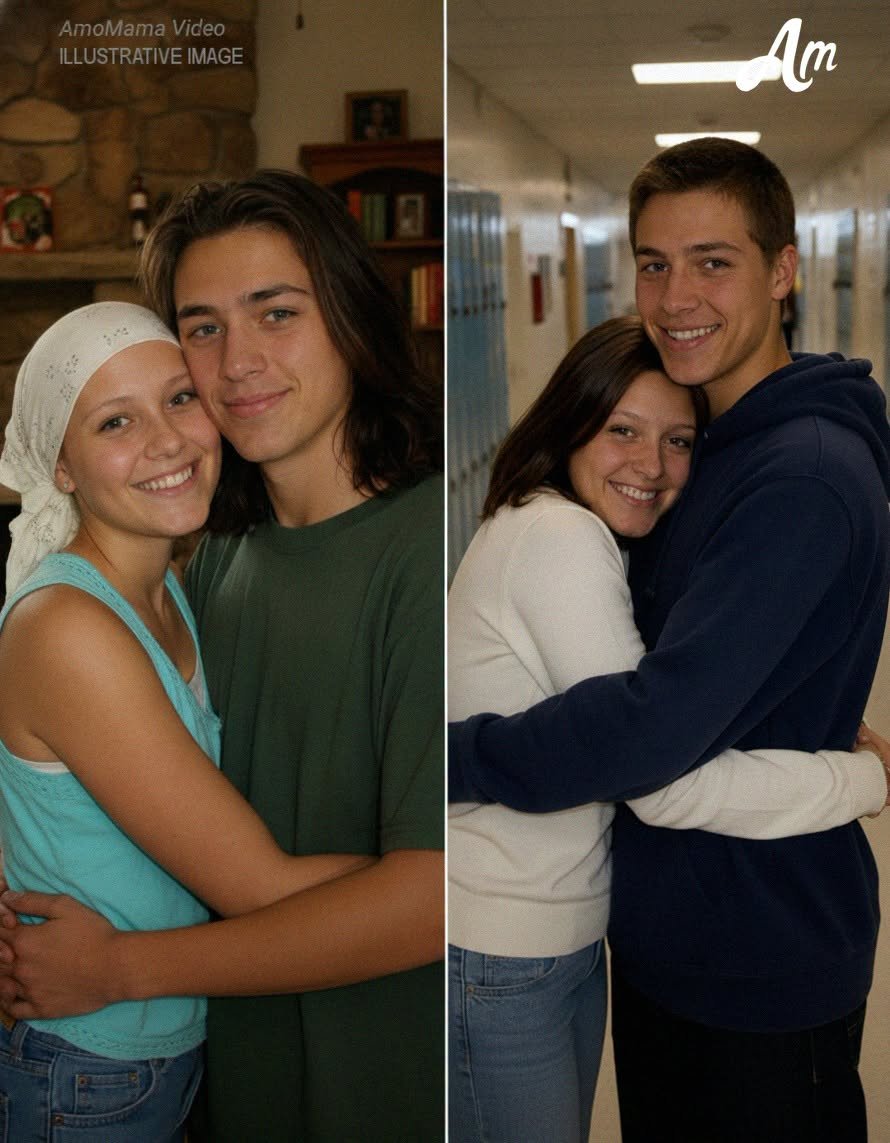
At 15, I lost my hair to cancer. My best friend Noah endured a year of cruel jokes, then cut off his long hair and had it made into a wig for me. Twenty-five years later, I found him beside his sick daughter’s hospital bed. He didn’t recognize me—but I’d kept something of his all those years.
Advertisement
The paperwork cart squeaked as I pushed it past the third door on the pediatric oncology hall, matching name tags to room numbers the way I did every Tuesday.
I had walked these corridors for three years as a volunteer.
I knew their rhythm by heart.
The soft beeping, the hushed voices, the smell of antiseptic that never quite faded.
I stopped outside room 214, where a new patient had been admitted.
I had walked these corridors for three years
A man sat inside, hunched in a hard plastic chair.
His hand rested over the blanket where his daughter slept.
“Excuse me,” I said gently, stepping in. “I’m one of the volunteers. I just wanted to introduce myself.”
He looked up, and the clipboard nearly slipped from my fingers.
Twenty-five years fell away in a single heartbeat.
He looked up, and the clipboard nearly slipped from my fingers.
Advertisement
It was Noah.
My childhood best friend.
“Hi,” he said. “Thank you for coming by. She’s finally resting.”
His smile was warm and polite.
And completely empty of recognition.
My childhood best friend.
“Of course,” I managed. “How is she doing?”
“Some days are better than others.”
He glanced back at the bed, at the girl whose scarf had slipped slightly on the pillow.
A graduation announcement was propped beside her water cup
“She’s tough. Tougher than me.”
I studied his face, searching for any flicker of recognition from the man I had loved like a brother.
“Some days are better than others.”
“You look like you haven’t slept,” I said.
“I slept here.” He gave a small, worn smile. “The chairs aren’t so bad once you stop expecting comfort.”
Advertisement
At fifteen, that same smile had greeted me across a classroom when I was too afraid to speak.
It had waited beside my hospital bed while I cried about my hair falling out in clumps.
“You look like you haven’t slept,”
“Has she been sick long?” I asked, forcing my voice steady.
“A few months now.” He rubbed the back of his neck. “You think you know how strong you are until it’s your kid.”
“I understand more than you’d think,” I said quietly.
He nodded the way people do when they assume a stranger is only being kind.
“Everyone’s been wonderful here,” he added. “It makes a difference, you know. Feeling like people actually see you.”